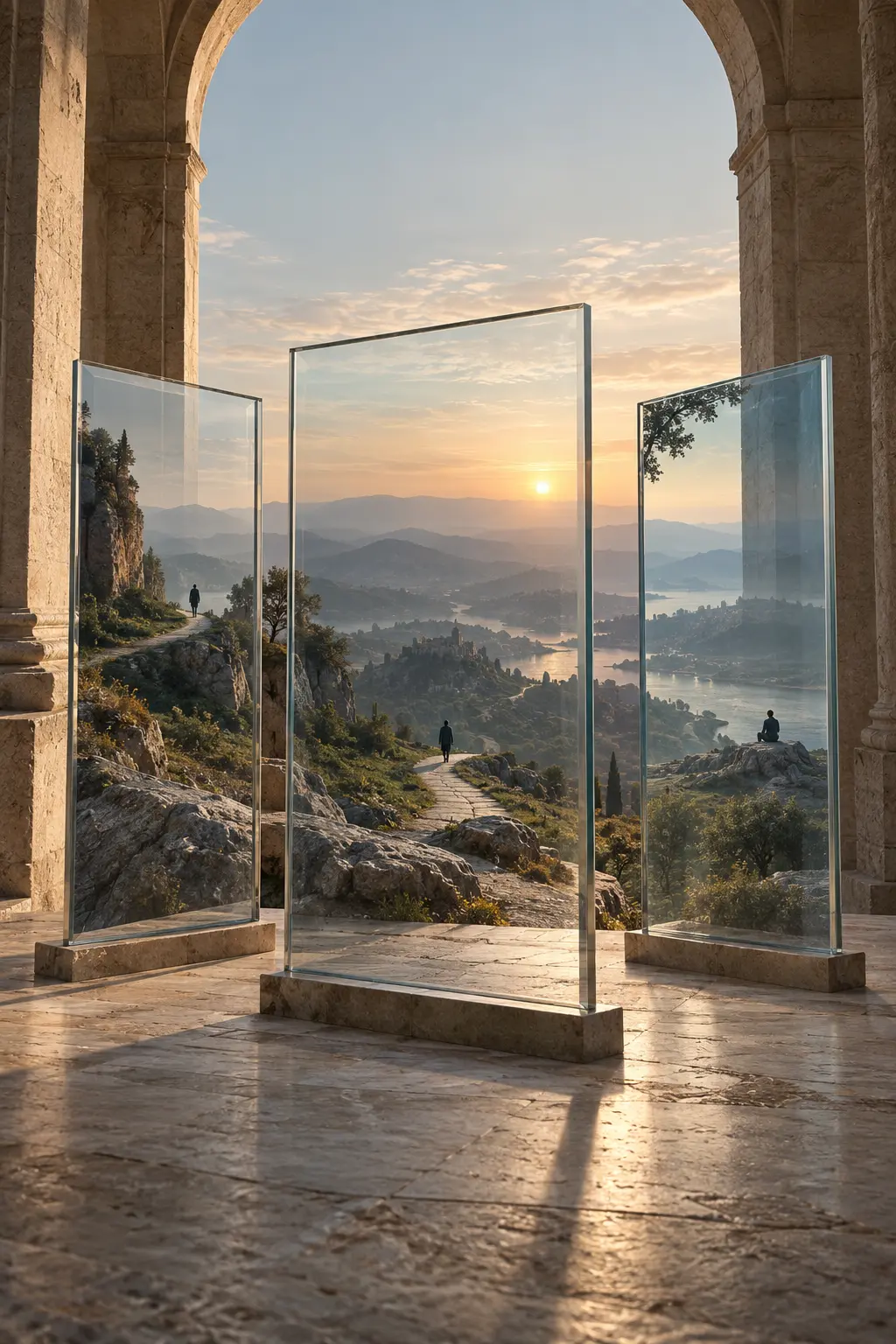
Perspective before judgment
Before judging a person or situation, change your vantage point. Another view may reveal relationships, pressures and possibilities that were previously hidden.
About the project
An independent, multilingual reflection project for people who feel that speed, certainty and spectacle have made it harder—not easier—to think about the questions that shape a human life.
Why it exists
Online, we encounter many facts and opinions. NURAYAHS is for readers who want to make time for questions of faith and meaning.
Film, sound, design and careful writing open a path into questions of identity, mortality, knowledge, faith, technology and responsibility. The aim is to make room for reflection and reading the sources.
The project is not built only for specialists or for people who already know its source tradition. It is for a parent trying to remain compassionate, a worker seeking integrity, a grieving person facing absence, a young mind living with doubt, and anyone asking what a finite life is for.
Three windows
A change of perspective does not make every interpretation true. It can, however, reveal what a hurried first glance has missed.
Before judging a person or situation, change your vantage point. Another view may reveal relationships, pressures and possibilities that were previously hidden.
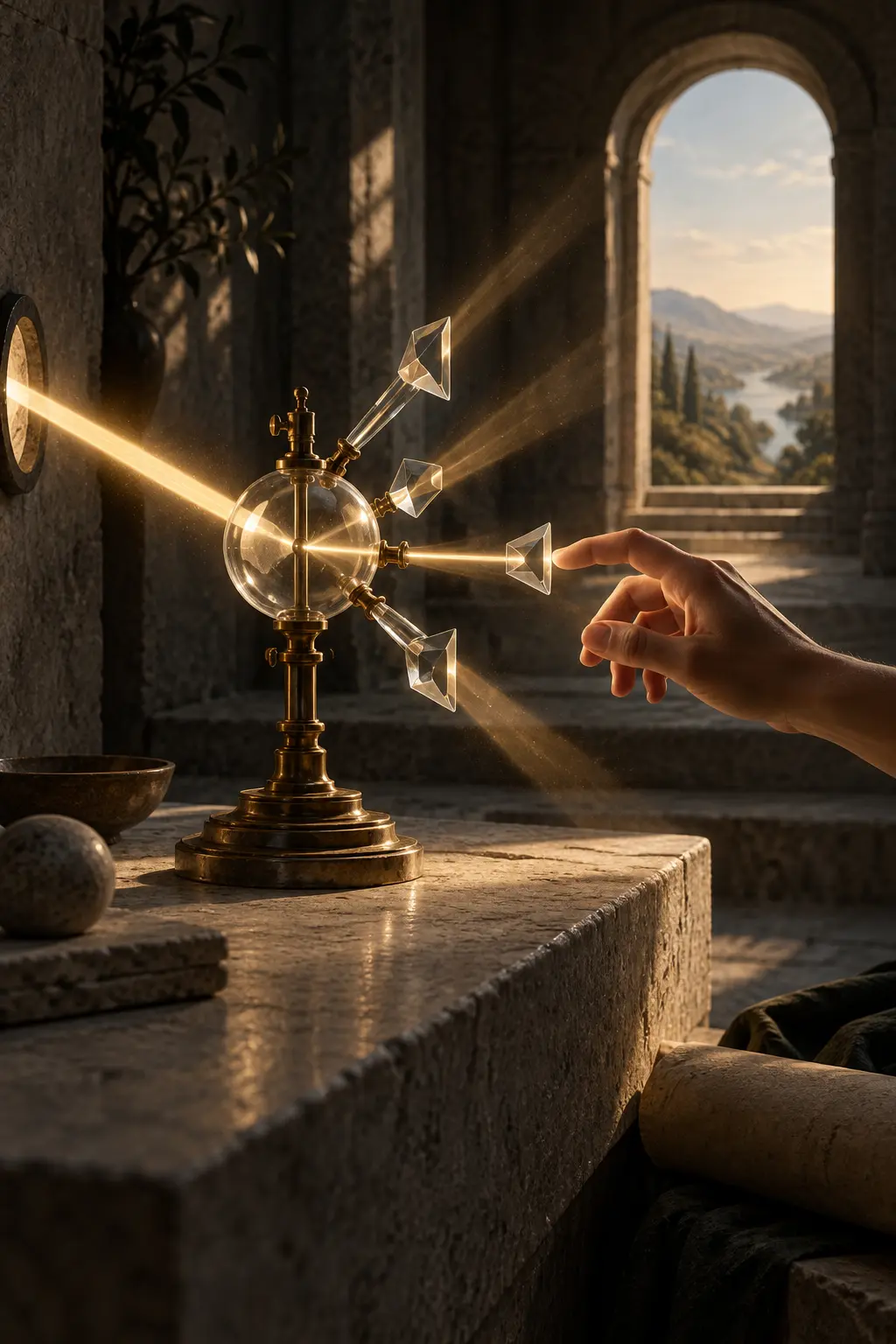
Knowledge opens possibilities. Intention, conscience and action determine what we make of them.
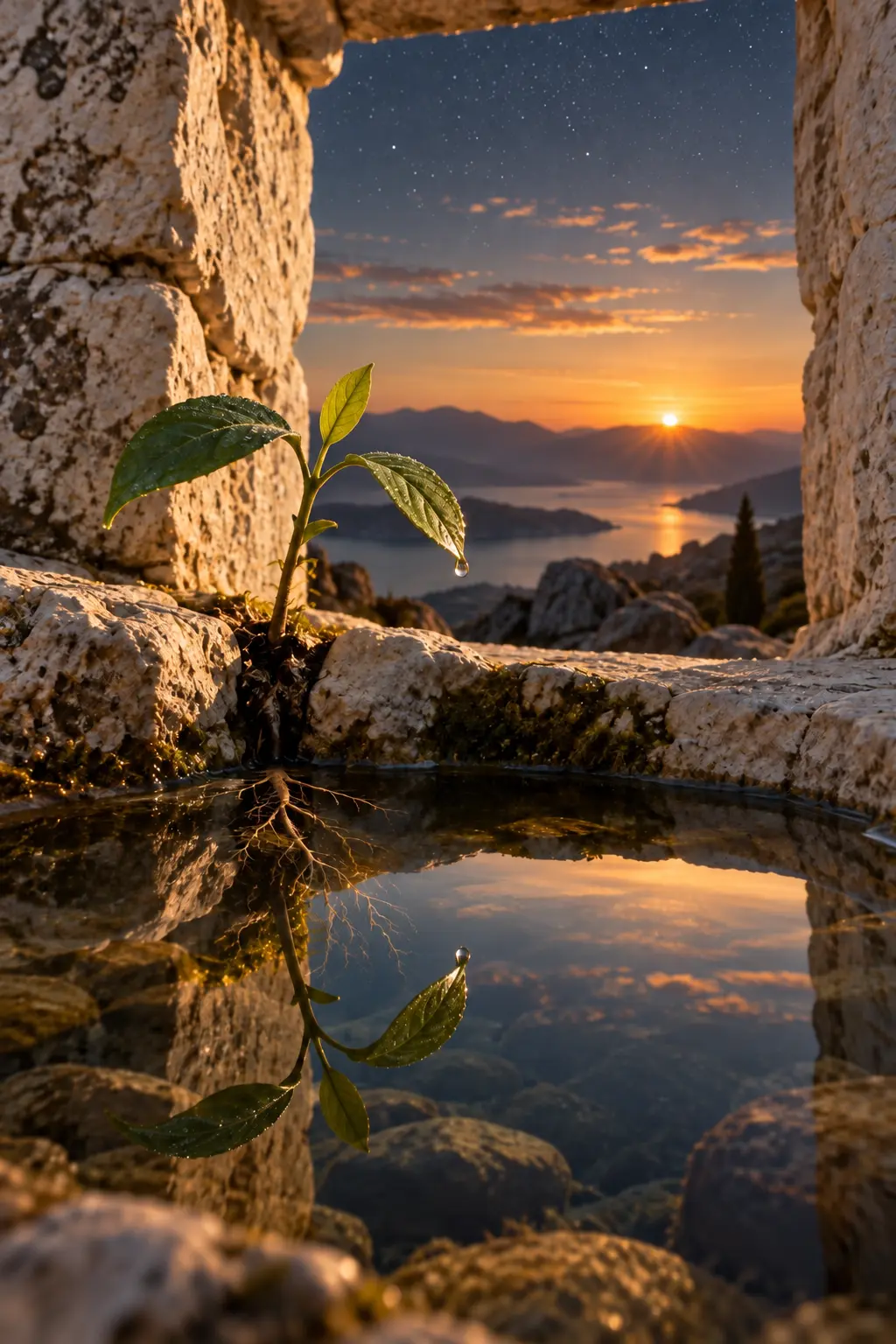
Attention sees more than objects to be used. In order, dependence, beauty and life, a person may discover signs that invite reflection on their Creator.
Artificial intelligence can compare, translate and open new paths of access. It has no conscience. Verification, interpretation and action remain human responsibilities.
A contemporary NURAYAHS reflection inspired by themes in the Risale-i Nur; not a direct quotation from Said Nursi. Read the source context
What we make
Each format has a different pace, but all move from attention toward context, meaning and source.
Short cinematic works that slow attention before they ask for an answer.
A source-grounded research guide for spiritual questions and the difficult realities of daily life.
Clear essays connecting enduring questions with technology, modern knowledge and lived experience.
Visible distinctions between revelation, quotation, biography, interpretation and original editorial work.
The source horizon
The Qur’an is treated as the highest religious source. The Risale-i Nur serves as an explanatory bridge: a twentieth-century body of Qur’anic reflection that addresses reason, the heart and the moral imagination together.
Said Nursi’s life is considered alongside the circumstances in which his works were written. Biographical information and his own statements are presented with their sources and context.
Contemporary essays and films are NURAYAHS editorial works. On the Questions page, visitors can create and copy a source-conscious prompt for use in their own AI. NURAYAHS does not receive the question or generate the answer. Any resulting answer comes from the visitor’s chosen provider and should be checked against the cited sources.
Meet the collection and its authorGlobal by design
A global project must keep meaning stable while allowing language, rhythm and cultural examples to become natural for each reader.
Source selection prioritizes verifiable texts in each work’s original language. Ottoman Turkish, Turkish, Arabic and Kurdish texts are assessed according to the work’s original language and the quality of the edition. Translations are identified in relation to the source text, with the aim of preserving meaning and context in every language.
Accessibility, readable contrast, modest imagery, mobile performance and respectful representation determine who can enter the work and remain with it.
We approach questions respectfully, present claims with their sources and state uncertainties clearly.
People are approached with agency, modesty and cultural coherence—not as material for spectacle or judgement.
Sources, boundaries, corrections and uncertainty remain part of the public work.
Clear boundaries
Trust begins by saying plainly what a project can—and cannot—be.
It does not replace the Qur’an.
It does not replace the Risale-i Nur or the wider Islamic scholarly tradition.
It does not speak on behalf of any religious community or political organization.
It is not a fatwa service, therapy, legal advice or a substitute for human care.
It is not merely a brand, a logo or a contest for attention.
A quiet bridge from wonder to primary sources.
An invitation to read, verify, reflect and act with responsibility.
A multilingual meeting place for faith, reason and lived experience.
An editorial and cinematic practice that protects dignity and context.
A work in service of meaning—not of itself.
The promise
Read slowly enough to follow the source.
Read the editorial methodNURAYAHS is continuously evolving. Content, features, and language versions are regularly reviewed, expanded, and refined. Factual feedback and corrections are welcome.